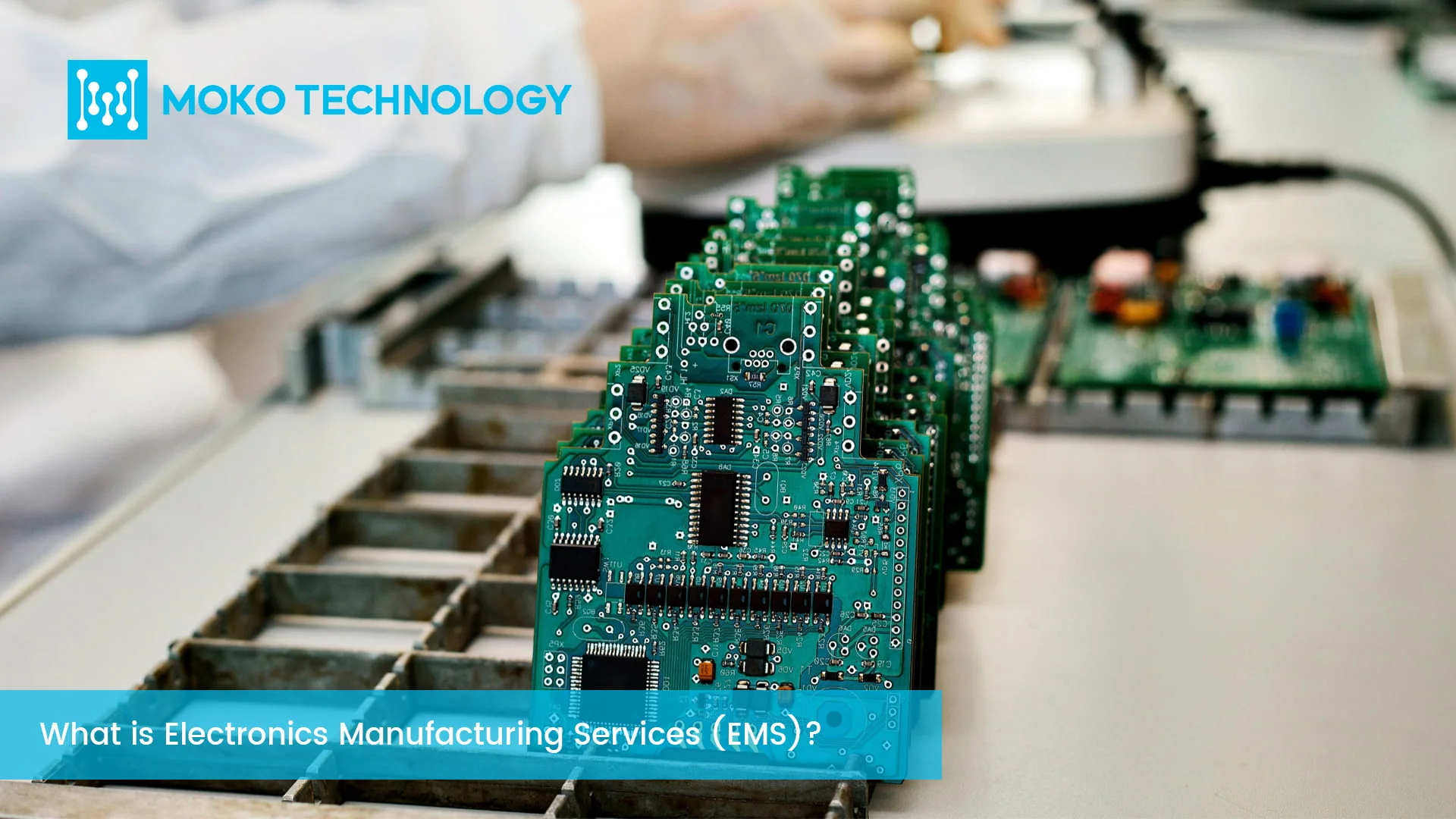
Many manufacturers choose to cooperate with EMS companies to enhance market competitiveness, and the demand for electronic manufacturing services continues to increase. MOKO, as a leading electronics manufacturer in China, has witnessed the evolution and rapid development of the EMS industry. In this article, we will bring you a comprehensive portrait of the industry, including the definition, benefits, how to choose electronic manufacturing services, and so on. Let’s dive right in…
What Are Electronics Manufacturing Services (EMS)?
Electronics manufacturing services (EMS) are offered by a specific class of companies that provide engineering, manufacturing, and other value-added services for Original Equipment Manufacturers (OEMs). In many cases, this term can be interchangeable with Contract Manufacturing Services (CMS) or Contract Electronics Manufacturing (CEM). EMS providers provide a wide scope of services for customers in different industries, ranging from design, manufacturing, and electronic assembly, to quality control, supply chain management, logistics, and after-sales support. EMS companies allow their customers to pay more attention to their core businesses such as research and development, marketing, and sales.
EMS vs. OEM: What Is the Difference?
| Aspect | OEM (Original Equipment Manufacturer) | EMS (Electronics Manufacturing Services) |
| Responsibility | Owns and develops the product | Manufactures products for OEMs |
| Brand Ownership | Yes | Usually No |
| Intellectual Property | Owns product IP and brand | Typically does not own product IP |
| Manufacturing | May outsource production | Core business is manufacturing |
| Simple Explanation | “What to build and sell” | “How to build it efficiently” |
What Electronics Manufacturing Services Companies Do
Printed Circuit Boards Assembly
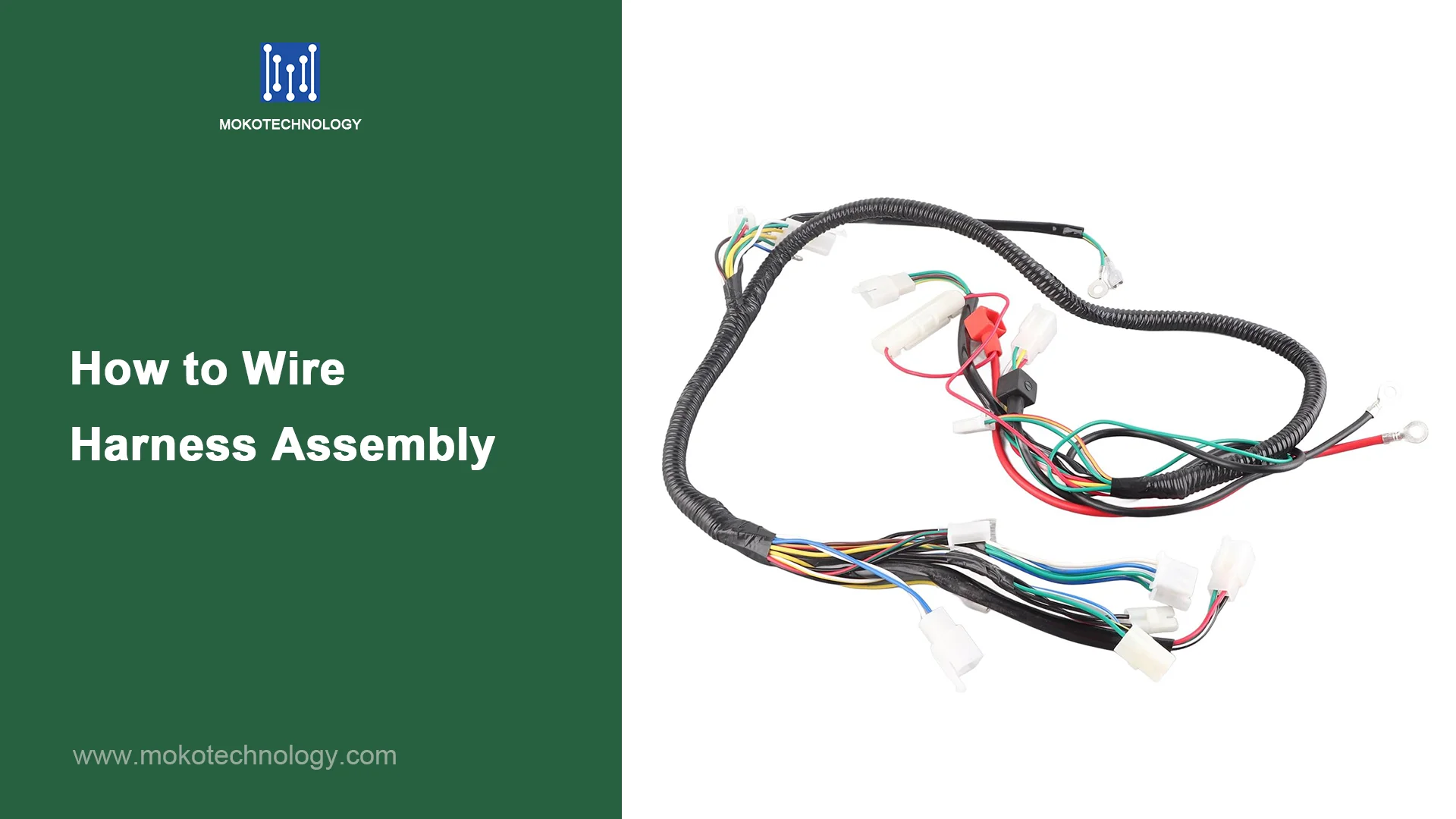
Printed circuit board assembly (PCBA) is one of the most important services provided by electronic manufacturing service providers, and it is also a very critical link in electronic manufacturing. It refers to a process that solders electronic components to the board by using SMT or though-hole technology, SMT is more popular in recent years though, as it allows manufacturers to assemble components more efficiently. However, building a precision assembly line can be costly, not every manufacturer can afford it, especially for those startups. Therefore, many manufacturers outsource PCBA services to EMS providers who can assembly complex circuit boards at fast turnaround times and competitive prices. In addition, many EMS companies can provide integrated electronics assembly services. Besides PCBA, some of them are capable of handling cable and wire harness assembly, box build assembly, electro-mechanical assembly, and other services.
Electronics Engineering Support
The technicians and engineers at EMS companies specialize in product management, manufacturing processes, and quality control. They work with customers closely to support them within the whole product life cycle, to turn their concepts into products on the shelf. Normally, engineering services offered by EMS companies include electronics design, PCB layout design, housing design, BOM and revision management, prototyping, DFM, and DFX services. Also, they cooperate with product certification entities such as ETL, TUV, or UL, to help manufacturers to obtain various certifications required for product circulation in the international market.
New Product Introduction
New product introduction (NPI) is one of the most important processes in electronics manufacturing, and it refers to the process that covers steps from initial conception, and prototyping to the final product. Before mass production, EMS providers will perform a comprehensive and in-depth evaluation of the new product, including P-FMEA evaluation, program preparation, trial production, and material verification, to find out potential risks. And in some cases, they also consider the design, construction, and preparation of any necessary product-specific tooling or fixtures. Working with an EMS provider who is experienced in NPI can bring your products to the market successfully within a short time.
Supply Chain Management and Procurement
Based on bill of materials (BOMs) and product specification, EMS providers help customers to purchase all materials and components needed. For some complicated products, hundreds of components may be required, which will undoubtedly make the supply chain very complicated. In this case, an EMS company can help you optimize your supply chain, finance on behalf of the OEM, help you source high-quality materials within your budget, and optimize service costs for your customers. Therefore, cooperating with excellent EMS companies can help OEMs bring greater profits. Moreover, electronics manufacturing services providers can provide inventory management services according to your needs.
Testing
In order to ensure that the products delivered to customers meet the quality requirements, EMS suppliers will conduct product testing. This is an indispensable link to avoid huge losses caused by product quality problems, including economic losses and damage to product and company reputation. They can directly use the equipment provided by customers to conduct various tests, including flying probe tests, burn-in tests, automatic optical inspection, functional tests, and other testing methods.
Benefits of Working with an EMS Provider

Partnering with a reliable electronics manufacturing services (EMS) provider offers numerous advantages, and the most significant four advantages are listed below:
Reduced investment
For OEM manufacturers without their own production lines, facilities, or skilled production and engineering staff, collaborating with an EMS provider can be the only way to bring a new product to market. EMS providers often make significant investments in infrastructure, technology, and personnel, and they can spread these costs among multiple customers, which means their fixed costs are shared. For OEMs with uncertain demand and fluctuating supply, working with an EMS provider is the most logical and cost-effective solution. Outsourcing helps OEMS save money, and time, and convert fixed costs that are usually very high into variable costs. The less quantity you order, the less you pay.
Skilled workforce
The need for a highly specialized workforce has become crucial with the changes in technology and customer demands. This requires not only good employee selection and training but also strong engineering expertise. This translates into substantial fixed costs that must be maintained for the assembly operations. By working with a qualified electronic manufacturing provider, the original equipment manufacturer can focus on new product development or marketing instead of spending more time on production and indirect manufacturing competencies. This not only reduces fixed costs, headcount, and personal and recruitment expenses but also minimizes the hassle of managing the production environment.
Supply Chain Expertise &Enhanced Inventory Management
Dependable electronic manufacturing service providers have extensive experience in managing procurement procedures and collaborating with pre-approved suppliers globally. They have solid planning capabilities and sophisticated ERP systems along with MES platforms to ensure smooth execution of assembly in production. These two components are crucial for managing a cost-effective production process and require expertise that is acquired through years of best practices. With these tools and capabilities, competent electronic manufacturers can respond to customer needs in a flexible and trustworthy way, not only on paper but also in a real production environment. Their knowledge in selecting approved suppliers, sourcing components, and efficiently executing the procurement process results in a well-managed supply chain. Partnering with electronics manufacturing companies frees OEMs from investing in complex IT systems and building supply chain management expertise that requires highly trained staff and long-term expertise. Professional EMS providers, on the one hand, can help to manage the supply chain, and on the other hand, they can aid OEMs to develop effective planning solutions while supervising. They work with material suppliers based on the customer’s specifications and agreements to minimize the client’s excess material and ensure a stable production process.
Boosted Efficiency and Cost Effectiveness
Late delivery can harm a company’s reputation and business. Partnering with a well-organized electronic manufacturing services provider reduces the risk of orders being delivered late, which could delay the final product delivery. This requires effective collaboration and consideration of the material’s lead times. Working with an EMS company also offers the advantage of leveraging their purchasing power and market position to negotiate more favorable material prices, as well as utilizing production equipment efficiently. The economies of scale result in a decrease in the unit cost of the OEM’s products, leading to additional financial benefits and efficiently-run projects.
Top Electronics Manufacturing Services (EMS) Companies
It is instinctive to select the largest EMS company from the list, and that’s exactly what most companies do. It’s often counterproductive, though. Foxconn’s scale is immense, and so is its customer base. Compared with customers placing orders in the millions, the startup or mid-sized OEM will receive a different level of attention with small orders.
The right question is not “who is the biggest EMS provider?” It should be “who will be the right option and will treat your program as strategically important”. So, it seems the answer is on Tier 2 or 3 EMS providers that have proven engineering depth, not Tier 1. Below is the list of top electronics manufacturing services companies for reference:
| Company | Location | Strength |
| Foxconn | Taiwan, China | World’s leading high-volume electronics manufacturer |
| Flex Ltd. | California, USA | From design to delivery, across different industries (healthcare, consumer electronics, automotive, and industrial sectors) |
| BYD Electronics | Shenzhen, China | A one-stop solution for manufacturing, logistics and post-sale. |
| Jabil Inc. | Florida, USA | Offers a comprehensive solution from design to PCB assembly and life cycle management |
| Celestica Inc. | Toronto, Canada | Strong NPI capability, specialty in aerospace, communication, healthcare, and industrial sectors |
| Sanmina Corp. | California, USA | Specializes in high-quality and complex electronics, and focus on defense, medical, and communication sectors |
| Benchmark Electronics | Arizona, USA | Full-scale design, engineering, and manufacturing built for aerospace, defense, and medical industries |
| TestPcbas | Shenzhen, China | Capable of providing one-stop PCB assembly solution (SMT, THT, BAG), including component sourcing, manufacturing and testing |
How to Choose the Appropriate EMS Partner

Choosing an appropriate EMS supplier is one of the most crucial choices that will significantly influence product quality. Here are some key factors to look at when comparing electronics manufacturing services partners:
1. Technical Capability & Equipment Match
It’s essential to know what kind of technology and facilities are being used by your electronic manufacturer. Use of advanced technology and equipment results in more efficient manufacturing processes than the use of old technology. With access to the latest technologies, manufacturers can produce high-quality products with increased reliability and speed, boosting market competitiveness. Request that the EMS partner provide you with a list of their equipment or visit their facility before making a decision. The best way to go about this is to ask specific and technical questions, so you can get a quick sense of the EMS partner’s ability.
Key questions include:
What is your minimum component pitch capability?
Do you support fine-pitch QFN / BGA assembly?
What PCB layer count and HDI structures can you support?
Do you have BGA rework/reballing capability in-house?
2. Quality Certifications & Standards Compliance
It’s all about quality and having an EMS provider with a robust quality control is key to keeping your reputation and business safe. Don’t just pay attention to the isolated certificate. It is important to consider if the EMS partner has the required standards for your product and industry. Some of the most common certifications and standards are:
Quality Management Systems
ISO 9001:2015 – baseline quality management system
Manufacturing & Process Standards
IPC-A-610 – widely used standard for PCB assembly
IPC-6012 – acceptability criteria
Industry-Specific Certifications
ISO 13485:2016 – medical device
AS9100 – aerospace
Regulatory & Environmental Compliance
RoHS – restriction of hazardous substances in electronics
REACH – chemical safety compliance in manufacturing
ITAR Compliance – export control compliance for defense-related products
Product Safety Standards
UL certification – safety compliance for electrical and electronic products
3. Engineering Support & DFM Capability
Price and lead time are most important when choosing an EMS company. Engineering support and DFM capability are typically not considered until a project fails. In reality, a good EMS partner is not only going to construct your design, but also make it better before the first board is ever constructed. Before parting with any EMS provider, make sure to ask these questions and see how specific their response is:
How is your NPI process?
A trusted and professional EMS provider will describe it in specific terms, for example, stages, durations, responsible teams, or deliverables. If they say something general, such as “we look at everything carefully”, you need to think twice.
How many DFM feedback do you give before the 1st build? In what form does that feedback take?
The DFM report is recommended to be written with specific line items. Typically, several review cycles prior to build sign-off are the norm.
What is an example of a DFM problem that you found that saved your customer from having to do a PCB respin?
If someone really has identified the problems that are causing the respin, they’ll have a story. A person who has not will give a generic response.
4. Testing Strategy & Defect Traceability
Common testing methods include: ICT (in-circuit test), FCT (functional test), AOI (automated optical inspection), X-ray, burn-in testing, flying probe test, etc. Not all the tests are standard, and some are optional for specific projects.
Testing catches defects in the factory, and traceability determines what you can do when a defect reaches the field. Below are the key questions you can ask the EMS provider, and bring these into your evaluation considerations.
What is your complete test sequence for a new product? What is standard and what is optional?
An EMS provider with a real and complete testing system will describe specific methods, sequence, and coverage.
What is your DPPM (Defects Per Million Parts) rate for a product in our category? How do you measure and track it over time?
This question usually has a specific numerical answer.
Can you show me a sample traceability report from a recent production run?
Though the document may be partly redacted, you can also see the format and content of the report that reveals the maturity of the system behind it.
5. Turnaround Time & Production Capacity
The time it takes to complete a project is crucial, especially for projects that require a large volume of production. It is crucial to confirm that the lead time of the electronic manufacturer corresponds with your project timeline in order to guarantee that your product can be launched on time. You must confirm their production capacity in order to ensure on-time delivery. Reliable electronic manufacturers can finish projects quickly because they have access to cutting-edge equipment and a reliable worldwide supply chain that delivers parts and materials on time. Switching an EMS provider is expensive and disruptive. So, validate their lead time and capacity before you commit. Below are the key questions for you to ask any electronics manufacturing services providers:
What is your current capacity utilization?
What is your largest single-customer volume?
Can you handle our volume today and our volume in 3 years?
Do you just have one factory, or have a backup capacity?
6. Expertise and Project Experience
Would you prefer to gamble with engaging a novice or a skilled electronic manufacturer in your project? One important factor to look out for when choosing electronic manufacturing companies is their experience and expertise. Particularly, they had handled some projects that were similar to your later project. Collaborating with seasoned partners who are familiar with different industry requirements. This guarantees the products meet industry standards and prevents any quality issues.
7. Supply Chain Depth & Component Sourcing
It’s important to find out whether they have a reliable and flexible supply chain system. Electronic manufacturers generally work with a range of suppliers around the globe to meet the diverse needs. And not get caught up in being constrained by procurement issues that could lead to delays. Furthermore, working with multiple suppliers allows them to have up-to-date information about the global market, such as supply shortages and price fluctuations. This allows them to make informed decisions, mitigate risks, and resolve any potential issues.
8. Cultural Fit
In addition to technical skills, there is also an important role for culture. Pick a partner who has a communication style and values that are congruent with your ideal communication style and values.
Conclusion
Electronics manufacturing is characterized by its swift pace of development and constant evolution. Providers of flexible solutions that can adapt quickly to these rapid changes will continue to be successful in meeting their customers’ needs.
TestPcbas keeps pace with the times, and innovation is the driving force for our continuous progress. We have a complete global electronics manufacturing business process, using world-leading equipment and advanced technology to continuously simplify our production process, aiming to help customers solve global electronics manufacturing challenges from design to implementation. We will work closely with you throughout your entire product development lifecycle from concept design, and engineering to manufacturing to enhance your market competitiveness. If you’re looking to start outsourcing your electronics manufacturing services, we’re a great choice. Contact us now to start your project!
FAQs
1. What type of company is EMS?
This type of company is a contract manufacturer that offers electronic products to other companies, typically Original Equipment Manufacturers (OEMs). They typically do not design or brand products, focusing entirely on the manufacturing (PCB assembly, testing, supply chain management, and logistics).
2. What is the difference between EMS, ODM, and OEM?
These are three distinct manufacturing models that are easily confused.
An EMS (Electronics Manufacturing Services) is a contract manufacturer that offers products on behalf of the OEM, but never owns the design.
An OEM (Original Equipment Manufacturer) designs its own product and either manufactures it in-house or outsources production. Simply, it retains full ownership of the design and IP.
An ODM (Original Design Manufacturer) both designs and manufactures the product. And then ODM licenses or sells it to a brand. However, the brand owns the final product but not the underlying design.
3. Is working with an EMS provider worth it for OEMs?
It is worth it for most OEMs. EMS partners eliminate the need for costly in-house assembly lines and reduce time-to-market. OEMs can focus on design and market growth.
 Arabic
 Dutch
Dutch English
 French
 German
 Italian
 Japanese
 Korean
 Portuguese
 Russian
 Spanish